
Document fraud: understand, detect, and prevent falsifications
Document fraud consists of falsifying, modifying, or fraudulently using a document in order to deceive a verification system or impersonate someone else’s identity. It affects many types of documents, including passports, ID cards, driver’s licenses, proof of income, and PDF files.
With the widespread use of digital exchanges and the availability of advanced editing software, it has become easier to modify a document or create a convincing falsification. Some modifications may be invisible to the naked eye and require advanced analysis techniques to be detected.
Detecting document fraud relies on analyzing visible security features, verifying data consistency, examining metadata, and performing forensic analysis of digital files.
What is document fraud
Document fraud refers to any attempt to manipulate a document in order to deceive a verification process. It may involve modifying an authentic document, creating a fake document, or using a document belonging to another person.
These fraud techniques are used in many contexts, including bypassing identity verification controls, obtaining services or benefits fraudulently, or concealing an individual’s true identity.
Digital documents, such as PDFs and images, are particularly vulnerable to this type of fraud because they can be easily modified without leaving visible traces.
Main forms of document fraud
Document fraud can take different forms, ranging from minor modifications to complete falsifications. In some cases, a fraudster modifies only a specific piece of information, such as a date or name, while in other cases the entire document is falsified.
Modifications may affect personal information, dates, amounts, or photographs. Some fraudsters also modify the internal structure of files or their metadata in order to conceal traces of manipulation.
Identity documents are particularly targeted, but financial, administrative, and professional documents can also be falsified.
How to detect document fraud
Document fraud detection relies on several complementary techniques. Verifying the consistency of information is a critical first step. Inconsistencies between different parts of a document may indicate falsification.
Metadata analysis makes it possible to identify the software used to create or modify the document, as well as the dates of modification. This information can reveal potential manipulation.
Forensic file analysis makes it possible to detect invisible modifications, particularly in images and PDF files. Examining compression, pixels, and file structure can reveal falsifications.
Verifying the MRZ (Machine Readable Zone) of identity documents also allows detection of falsifications using check digits defined by the ICAO 9303 standard.
Guides on document fraud detection
The following guides explain in detail the techniques used to falsify documents and the methods used to detect these manipulations:
- PDF fraud: understand and detect falsifications
- MRZ fraud: types of falsification and detection
- Fake documents: methods and detection
- Identity theft: definition and detection
Why document fraud detection is essential
Document fraud represents a significant risk for businesses, government agencies, and digital platforms. It can allow fraudsters to bypass security controls, impersonate someone, or obtain services fraudulently.
Implementing document verification mechanisms helps reduce these risks and ensures the reliability of documents used in verification processes.
The use of automated tools allows faster and more reliable detection of falsifications and helps secure document verification workflows.
All articles

Identity theft: definition, risks, detection, and prevention
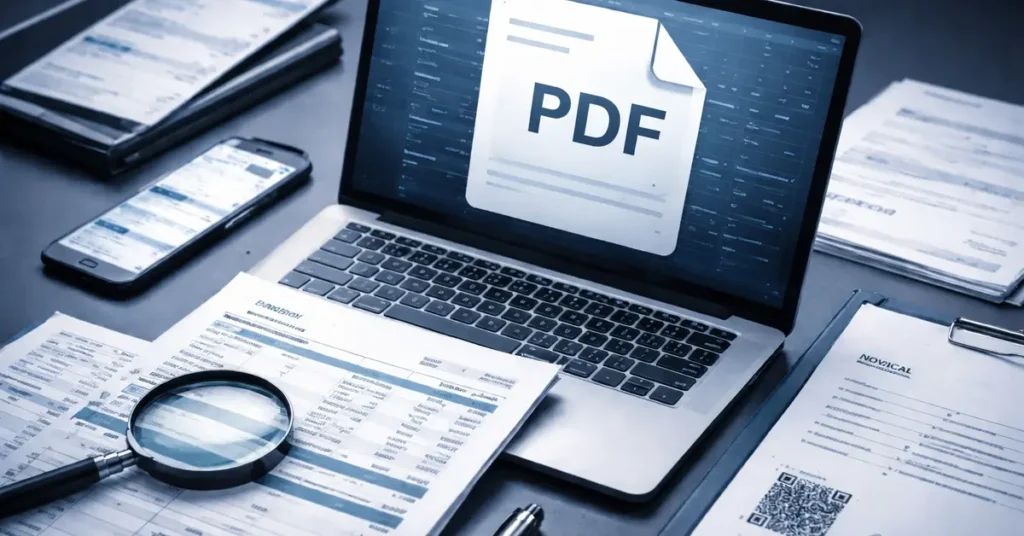
PDF Fraud: understanding, detecting, and verifying falsifications

Forged documents: understanding, detecting, and verifying fake documents
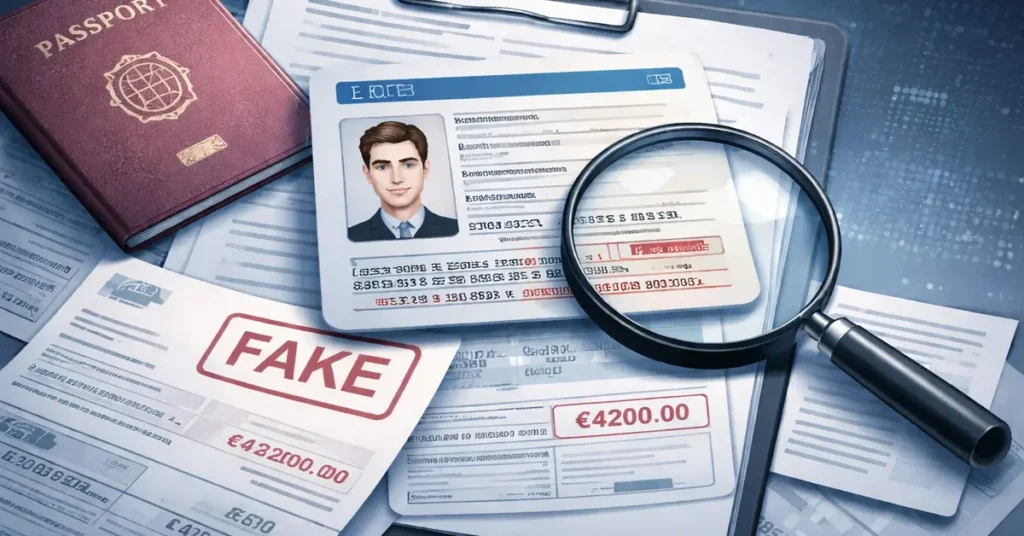
Document fraud: the most common frauds and how to detect them
FAQ on document fraud
Verify a document automatically
TrustDocHub allows automatic document analysis and fraud detection by examining file structure, metadata, and inconsistencies.