Introduction: a rapidly growing form of fraud in the digital age
Identity theft is now one of the most widespread forms of fraud in digital environments. It consists of using another person’s personal information without their authorization in order to impersonate them and gain access to services, carry out financial transactions, or bypass verification systems. This type of fraud affects individuals, businesses, banks, online platforms, and government institutions alike.
The widespread adoption of digital services and remote procedures has significantly increased exposure to this risk. Opening a bank account, subscribing to a service, or validating an application now often relies on submitting a photo of an identity document or a digital file. While these processes enable fast verification, they also create opportunities for fraudsters, who can use stolen, falsified, or manipulated documents to impersonate someone else.
In this context, document verification and forensic file analysis have become essential. They make it possible to identify inconsistencies, falsifications, and anomalies invisible to the naked eye, and play a central role in fraud prevention.
What is identity theft?
Identity theft refers to the use of another person’s personal information in order to impersonate them, without their consent. This information may include their name, date of birth, address, identity document number, or even a full copy of a passport or national ID card.
From an operational perspective, identity theft occurs when a fraudster successfully deceives a verification system by presenting information or documents that appear authentic. The system then considers the fraudster to be the legitimate person, allowing them to access services or carry out fraudulent transactions.
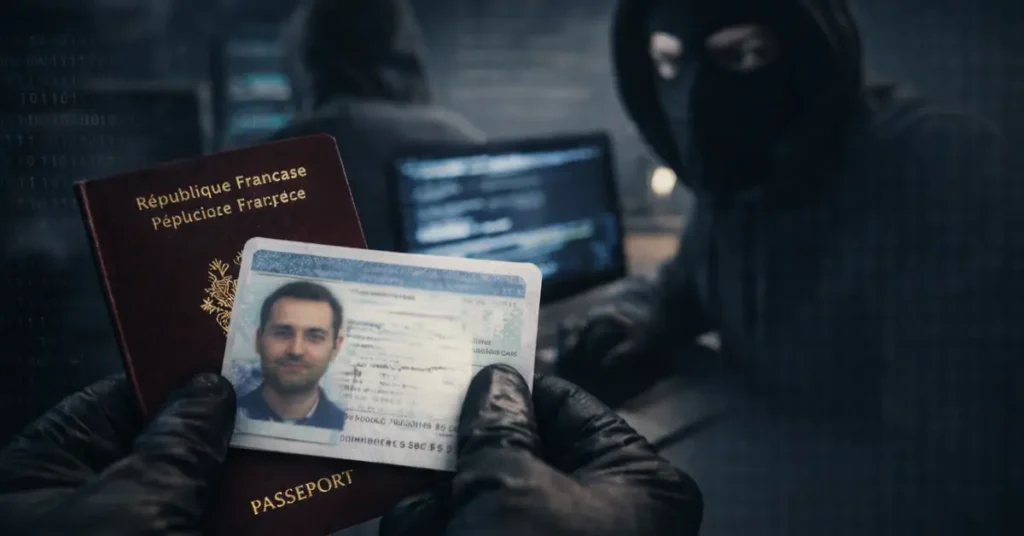
This type of fraud can take different forms. In some cases, the fraudster uses a genuine document belonging to another person, obtained through theft or a data breach. In other cases, they use a falsified document modified using digital tools to replace the photo, alter the name, or modify certain information. There are also synthetic identities, created by combining real and fictitious information to produce a credible identity.
Regardless of the method used, the objective remains the same: to deceive verification systems and exploit an identity that does not belong to them.
How fraudsters obtain identities
Fraudsters use many methods to obtain personal information and identity documents. One of the most common is the physical theft of documents such as passports, identity cards, or driver’s licenses. Once in possession of these documents, they can use them directly or create digital copies.
Data breaches are also a major source of information. When a company is the victim of a cyberattack, databases containing personal information may be compromised. This data, which sometimes includes copies of identity documents, is then resold on underground markets and used for fraudulent purposes.
Fraudsters also use phishing techniques, which involve deceiving victims by impersonating legitimate institutions. For example, they send fake emails or create fake websites to encourage victims to provide their documents or personal information.
Finally, the falsification of digital documents is a widely used method. Fraudsters modify images or PDF files to change information such as the name, date of birth, or photo. These modifications can be difficult to detect without in-depth analysis, making this type of fraud particularly effective.
How identity theft is used
Once a fraudster has a usable identity, they can use it to access many services. One of the most common uses is opening bank accounts. By impersonating the victim, the fraudster can create an account and use it to receive or transfer money.
Identity theft is also used to obtain loans or carry out fraudulent purchases. The fraudster then engages the victim’s liability, who may find themselves facing debts they never incurred.
Digital platforms, including financial services, cryptocurrency platforms, and online services, are also frequent targets. By bypassing verification systems, fraudsters can create accounts, carry out transactions, or access services under a false identity.
In some cases, identity theft is used to bypass regulatory controls, particularly as part of KYC (Know Your Customer) procedures, in order to conceal the fraudster’s real identity.
Individuals, do you occasionally need to verify one or more identity documents ?
Professionals, do you need to integrate proof of identity validation into one of your business processes, including all European identity cards and global passports ?
How to detect identity theft
Detecting identity theft largely relies on analyzing the documents and data provided. Falsified documents often present anomalies, such as visual inconsistencies, text modifications, or differences in the file structure.
Metadata analysis can also reveal important clues. For example, a document may have been modified recently or created using editing software, which may indicate manipulation.
Verifying data consistency is also essential. Inconsistencies between different fields, or between multiple documents, may reveal fraud attempts. For example, a date of birth incompatible with the document format or an inconsistency in MRZ check digits may indicate falsification.
Forensic analysis goes further by examining the internal structure of files, image pixels, and traces of modification. These techniques make it possible to detect manipulations invisible to the naked eye.
The role of document verification in prevention
Document verification plays a central role in preventing identity theft. It involves analyzing submitted documents to verify their authenticity, integrity, and consistency.
Verifying the MRZ of identity documents makes it possible to detect inconsistencies or modifications. The check digits integrated into the MRZ help verify data integrity and detect many falsifications.
Forensic analysis of images and PDF files also makes it possible to detect fraudulent modifications. By examining metadata, file structure, and traces of modification, falsified documents can be identified.
These techniques make it possible to detect identity theft attempts before they cause damage and are an essential component of verification processes.
Consequences of identity theft
Identity theft can have serious consequences for victims. It may result in financial losses, fraudulent debts, and administrative problems. Victims may also suffer reputational damage or face difficulties accessing certain services.
For businesses, identity theft represents a significant financial and regulatory risk. It can lead to financial losses, fraud, regulatory sanctions, and loss of user trust.
Preventing and detecting this type of fraud is therefore essential to protect both individuals and organizations.
How to prevent identity theft
Prevention largely relies on implementing robust verification processes. Automated document verification makes it possible to quickly identify falsified or suspicious documents.
Forensic file analysis makes it possible to detect modifications invisible to the naked eye. Data consistency verification helps identify anomalies and inconsistencies.
For individuals, it is important to protect their documents and personal information and avoid sharing them with untrusted sources.
The combination of these measures significantly reduces the risk of identity theft.
Conclusion
Identity theft is a complex and constantly evolving form of fraud, facilitated by the digitalization of services and the circulation of data. It often relies on the use of stolen or falsified documents to deceive verification systems.
Document verification and forensic analysis play an essential role in detecting and preventing this type of fraud. By analyzing documents, metadata, and data consistency, identity theft attempts can be identified and systems can be protected against fraud.
Implementing robust verification processes and using appropriate tools is now essential to secure digital services and prevent risks related to identity theft.
Individuals, do you occasionally need to verify one or more identity documents ?
Professionals, do you need to integrate proof of identity validation into one of your business processes, including all European identity cards and global passports ?