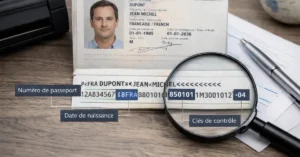
Introduction: why Error Level Analysis is used in forensic analysis
Digital images are now at the core of document verification processes. They are used to transmit identity documents, proof of address, bank statements, payslips, and contracts. While this digitalization facilitates exchanges, it has also contributed to the development of new types of fraud based on image manipulation.
Some falsifications are extremely difficult to detect visually. Simple tools make it possible to modify a name, a date, an amount, or even replace a photo while maintaining a realistic appearance. In response to these risks, forensic image analysis techniques play a critical role. Among them, Error Level Analysis, or ELA, is a particularly effective method for detecting modifications invisible to the naked eye.
Error Level Analysis relies on analyzing the compression levels of an image in order to identify inconsistencies that indicate modification. This technique is widely used in cybersecurity, document verification, digital investigations, and compliance processes.
What is Error Level Analysis (ELA)
Error Level Analysis is a forensic analysis technique that allows visualization of compression differences within an image. It is based on the principle that an intact image generally has a uniform compression level, whereas a modified image presents localized variations due to the recompression of certain areas.
When an image is saved in JPEG format, it undergoes lossy compression. This compression reduces file size by removing some visual information considered non-essential. If the image is then modified and saved again, certain areas may be compressed differently from the rest of the image, creating detectable inconsistencies.
ELA consists of recompressing the image at a known quality level, then comparing the recompressed image to the original image. The differences between the two images are then visualized. These differences highlight areas that do not follow the same compression behavior as the rest of the image, which may indicate modification.
How JPEG compression works
To understand Error Level Analysis, it is necessary to understand how JPEG compression works. The JPEG format uses what is called “lossy compression,” which means that some information is irreversibly removed in order to reduce file size.
When an image is compressed, it is divided into blocks of pixels, and each block is mathematically processed to simplify visual data. This process results in a slight degradation of quality, usually invisible to the naked eye.
An image that has only been compressed once presents a consistent and uniform distribution of compression artifacts. In contrast, when an image is modified, the altered area is often recompressed differently, creating local inconsistencies. These inconsistencies form the basis of detection using Error Level Analysis.
How Error Level Analysis works
Error Level Analysis relies on a relatively simple but highly effective process. The original image is first recompressed at a specific quality level. This recompression generates a new version of the image with uniform compression.
The recompressed image is then compared pixel by pixel with the original image. The differences between the two images correspond to compression errors. These differences are typically amplified and visualized in the form of a new image called the ELA image.
In this image, areas with normal compression behavior appear relatively uniform. In contrast, areas that have been modified often present different error levels, making them visible.
How to interpret an ELA analysis
Interpreting an ELA image allows compression anomalies to be identified. In an authentic and intact image, error levels are generally distributed uniformly. This means the entire image presents a consistent compression signature.
When an image has been modified, certain areas may appear brighter or more contrasted in the ELA image. These differences indicate that those areas did not undergo the same compression as the rest of the image.
For example, if a photo has been replaced on an identity document, the area containing the photo may present a different error level. Similarly, if text has been modified in a document, the altered area may appear as an anomaly in the ELA analysis.
These anomalies are generally not visible in the original image, but they become detectable through compression level analysis.
Individuals, do you occasionally need to verify one or more identity documents ?
Professionals, do you need to integrate proof of identity validation into one of your business processes, including all European identity cards and global passports ?
Detecting document falsification using ELA
Error Level Analysis is particularly useful for detecting falsified digital documents. In identity documents, it can reveal a replaced photo, a modified name, or an altered date. These modifications generally involve localized recompression that leaves detectable traces.
In financial documents, ELA can detect modifications to amounts, beneficiaries, or dates. These falsifications are common in fraud involving income proof or bank statements.
ELA is also useful for analyzing proof of address, invoices, or screenshots. Any digital modification potentially introduces compression inconsistencies that analysis can reveal.
This technique therefore represents a valuable tool for businesses, digital platforms, and organizations responsible for verifying document authenticity.
Advantages of Error Level Analysis
One of the main advantages of Error Level Analysis is its ability to detect modifications invisible to the naked eye. Even very well-executed falsifications can leave detectable traces at the compression level.
ELA is also a non-destructive method, meaning it does not alter the original image. It can be used in an automated way, making it suitable for integration into large-scale document verification systems.
This technique is particularly suited for analyzing JPEG images, which are the most commonly used format for transmitting digital documents.
Limitations of Error Level Analysis
Despite its effectiveness, Error Level Analysis has certain limitations. If an image has been recompressed multiple times after modification, the original traces may be reduced or removed, making detection more difficult.
Images processed by messaging applications or social media platforms are often automatically recompressed, which can uniform compression levels and mask certain anomalies.
Furthermore, ELA does not constitute absolute proof of falsification. Some normal compression variations may appear in authentic images. The interpretation of results must therefore be carried out carefully.
For this reason, Error Level Analysis is generally used in combination with other forensic analysis techniques.
Combining ELA with other forensic analysis techniques
To improve detection reliability, Error Level Analysis is often combined with other analysis methods. Metadata analysis, for example, can detect inconsistencies in file history or the software used to create it.
Digital noise analysis makes it possible to identify inconsistencies in image noise structure, which can reveal modified areas. Pixel analysis can also detect visual or statistical anomalies.
Combining these techniques provides a much more reliable assessment of the authenticity of a digital document.
Use of ELA in automated document verification systems
Error Level Analysis is widely used in automated document verification systems. These systems analyze submitted images in order to detect anomalies that may indicate fraud.
In identity verification processes, also known as KYC (Know Your Customer), ELA helps detect falsified documents before validation. It therefore contributes to strengthening security and preventing fraud.
Document verification platforms often use ELA in combination with other analysis techniques in order to provide a reliable and automated authenticity assessment.
Conclusion
Error Level Analysis is an essential technique in forensic image analysis. By analyzing compression levels, it makes it possible to detect invisible modifications and identify potential falsifications.
This method is particularly useful for verifying digital documents, including identity documents, financial records, and administrative files. It plays a key role in preventing document fraud and securing verification processes.
Although ELA has certain limitations, it remains a powerful tool when used in combination with other forensic analysis techniques. It is now a central component of modern document verification systems.
Individuals, do you occasionally need to verify one or more identity documents ?
Professionals, do you need to integrate proof of identity validation into one of your business processes, including all European identity cards and global passports ?