Introduction
Digital images now play a central role in document verification processes. They are used to transmit identity documents, proof of address, bank statements, payslips, and contracts. However, this widespread use of digital exchanges has also contributed to the emergence of a specific type of fraud: image falsification, also known as image tampering.
Thanks to accessible tools such as Photoshop, GIMP, or even mobile applications, it is now possible to modify an image in just a few minutes. A fraudster can change a name, modify a date, replace a photo, or alter an amount in order to deceive a verification system or a human reviewer.
These modifications are often invisible to the naked eye. However, every falsification leaves technical traces. Forensic image analysis makes it possible to detect these traces and determine whether an image has been modified after its creation. This method is now an essential component in detecting document fraud.
What is image falsification (image tampering)?
Image falsification refers to any intentional modification of an image’s content in order to alter the information it contains. This modification occurs after the image’s original creation and generally aims to deceive a verification system, a company, or an administrative authority.
It is important to distinguish between legitimate modifications and fraudulent ones. Some transformations, such as compression, resizing, or format conversion, do not alter the informational content of the document. In contrast, any modification intended to change data, hide information, or add an element constitutes falsification.
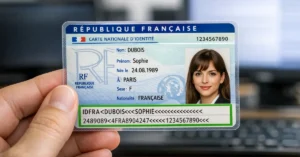
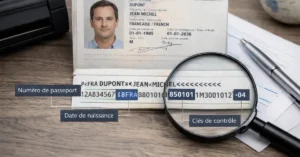
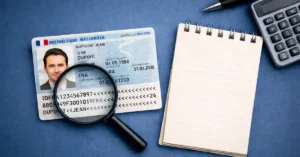
Falsified images frequently involve sensitive documents. These may include identity card photos, passport scans, proof of income, or invoices. In many cases, these images are used in registration processes, identity verification procedures, or administrative validation workflows.
Main types of image falsification
Image falsification can take different forms depending on the fraudster’s objective. One of the most common methods involves modifying text. This may include changing a name, date of birth, expiration date, or financial amount. These modifications are typically performed by replacing an existing text area with a new value.
Photo replacement is another frequent technique, especially in identity documents. The fraudster replaces the original photo with another image to match the document to a different person.
The copy-paste technique, known as copy-move forgery, involves copying a region of the image and pasting it elsewhere to hide information or duplicate an element. This method is often used to conceal defects or remove mentions.
Some fraudsters also add new elements, such as a signature, stamp, or administrative mention. Conversely, they may remove sensitive information, such as an expiration date or restrictive mention.
All these manipulations modify the internal structure of the image and leave traces that can be detected through forensic analysis.
Why falsification always leaves traces
A digital image is composed of pixels organized according to a precise structure. When an image is modified, this structure is altered. Even if the modification appears visually perfect, it creates technical inconsistencies.
These inconsistencies may involve digital noise. Each image contains characteristic noise related to the camera sensor. When a region is modified, its noise becomes inconsistent with the rest of the image.
Compression is another source of anomalies. JPEG images use a specific compression algorithm. When an image is modified and saved again, some areas may display different compression levels.
Textures, gradients, and contours may also reveal anomalies. A modified area often presents transitions that differ from the rest of the image.
These inconsistencies are invisible to the human eye but can be detected using specialized analysis techniques.
Forensic pixel analysis
Pixel analysis is one of the fundamental methods used to detect falsification. It involves examining the internal structure of the image to identify anomalies.
Each pixel contains precise information about its color and intensity. When an image is modified, this information becomes inconsistent with neighboring pixels.
Digital noise analysis makes it possible to detect areas whose noise differs from the rest of the image. This difference often indicates that a region has been added or modified.
Contour analysis also helps identify abnormal transitions. Modifications often create artificial edges that differ from natural contours.
JPEG compression artifact analysis helps detect areas that have undergone multiple compressions, which is a common indicator of modification.
Individuals, do you occasionally need to verify one or more identity documents ?
Professionals, do you need to integrate proof of identity validation into one of your business processes, including all European identity cards and global passports ?
Metadata analysis
Metadata consists of information embedded within the image file. It contains technical data about the creation and modification of the file.
This information may include the creation date, the software used, the camera model, and sometimes even details about modifications performed.
Metadata analysis helps detect certain inconsistencies. For example, an image claimed to originate from a smartphone may contain metadata indicating the use of editing software.
The absence of metadata may also be suspicious, especially when such information would normally be present.
However, metadata can be modified or removed. It must therefore be analyzed alongside other techniques.
Advanced falsification detection techniques
Several advanced techniques make it possible to detect image falsifications with high precision.
Error Level Analysis (ELA) is one of the most well-known methods. It analyzes compression differences within the image. Modified areas display different error levels.
Noise consistency analysis helps detect inconsistencies in the image’s digital noise.
Duplication detection helps identify regions that have been copied and pasted.
Gradient and texture analysis also helps identify anomalies invisible to the naked eye.
These techniques are used in professional document fraud detection tools.
Identity documents and administrative documents
Identity documents are among the primary targets of image falsification. Fraudsters often modify the photo, name, date of birth, or expiration date.
Proof of address, bank statements, and payslips are also frequently falsified to bypass administrative or financial controls.
In these cases, forensic analysis makes it possible to detect invisible inconsistencies and identify falsified documents.
This analysis is now an essential component of KYC (Know Your Customer) procedures, fraud prevention, and document verification.
Limitations of human visual analysis
The human eye is not designed to detect technical inconsistencies in a digital image. A properly executed modification may be completely invisible visually.
Even an expert may fail to detect falsification without specialized tools.
Forensic analysis relies on mathematical and technical methods capable of detecting invisible anomalies.
Automated tools provide a significantly higher level of accuracy than visual inspection alone.
Automated image verification
Modern verification tools use multiple combined techniques to analyze an image.
They examine pixels, metadata, compression, and overall image consistency.
This approach makes it possible to detect a wide range of falsifications, even sophisticated ones.
These tools are now used by companies, financial institutions, and digital platforms to secure their processes.
Conclusion
Image falsification represents a growing threat in a world where digital exchanges are omnipresent. Modern editing tools make it easy to modify a document that appears authentic.
However, every modification leaves technical traces. Forensic analysis makes it possible to detect these traces by examining pixels, compression, and metadata.
This approach makes it possible to identify falsified images with a high level of reliability.
Forensic analysis is now an essential tool for securing document verification processes, preventing fraud, and ensuring the authenticity of digital documents.
Individuals, do you occasionally need to verify one or more identity documents ?
Professionals, do you need to integrate proof of identity validation into one of your business processes, including all European identity cards and global passports ?